
About 60% of Natick voters who went to the polls on Tuesday approved a $7M operating budget override, a result that will save town and school jobs and allow investment in more in capital projects than would have been the case if the ballot question failed. Nearly 30% of those registered to vote cast ballots either in advance or on Tuesday.
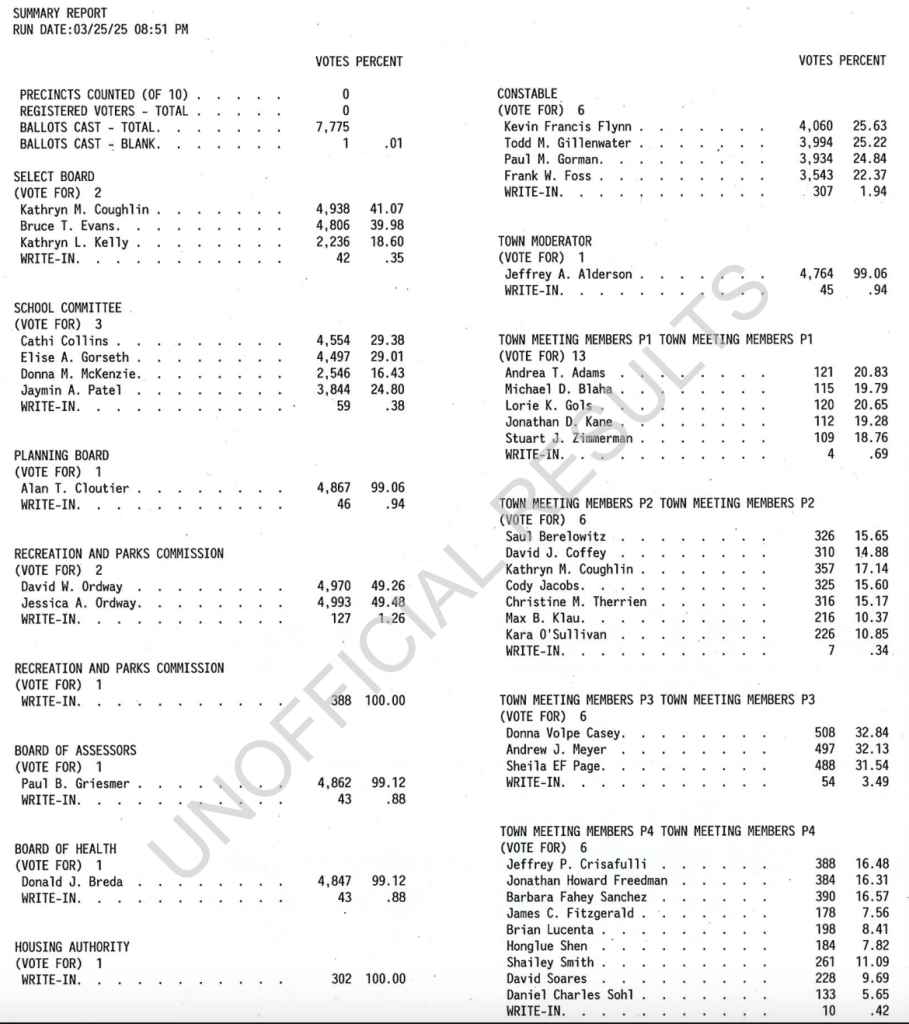
The town released unofficial results Tuesday night. The unofficial numbers do not include provisional ballots, hand counts or write-in votes. These will be updated in coming days.
The town went to great lengths, with numerous public forums and creative online resources, to share the numbers behind the town’s first override request since Natick approved a $3.9M one in 2008. The town had been largely talking about a potential $8M override, but shaved it to $7M before the Select Board voted in February to put a question to voters on the ballot. Natick had been heading toward an override request before the COVID-19 pandemic struck; one-time funds made available during the pandemic then delayed what became inevitable as town leaders continued to point to a “structural deficit” between revenue and rising expenses. A “Yes for 1” campaign organized early to encourage voters to buy in to the override.
Convincing voters to approve the override was no easy task in the face of inflation and already soaring property taxes. The override amounts to a permanent tax increase—it will translate into a $453 hit for those with single-family homes assessed at about $780K (Natick’s median home value). Those against the override argued that the town needed to tighten its belt, just as households do during tight economic times.
The Select Board has spent its past couple of meetings discussing commitments it can make to address residents’ challenges paying taxes, to boost revenue other than from property taxes, and to review the town’s overall financial practices.
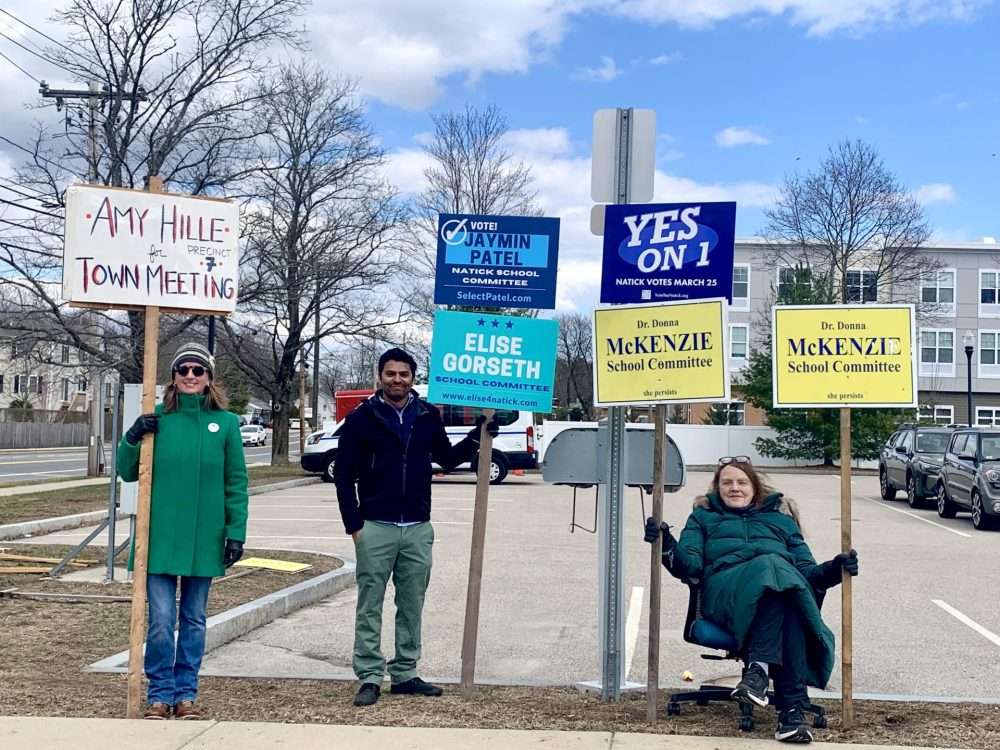
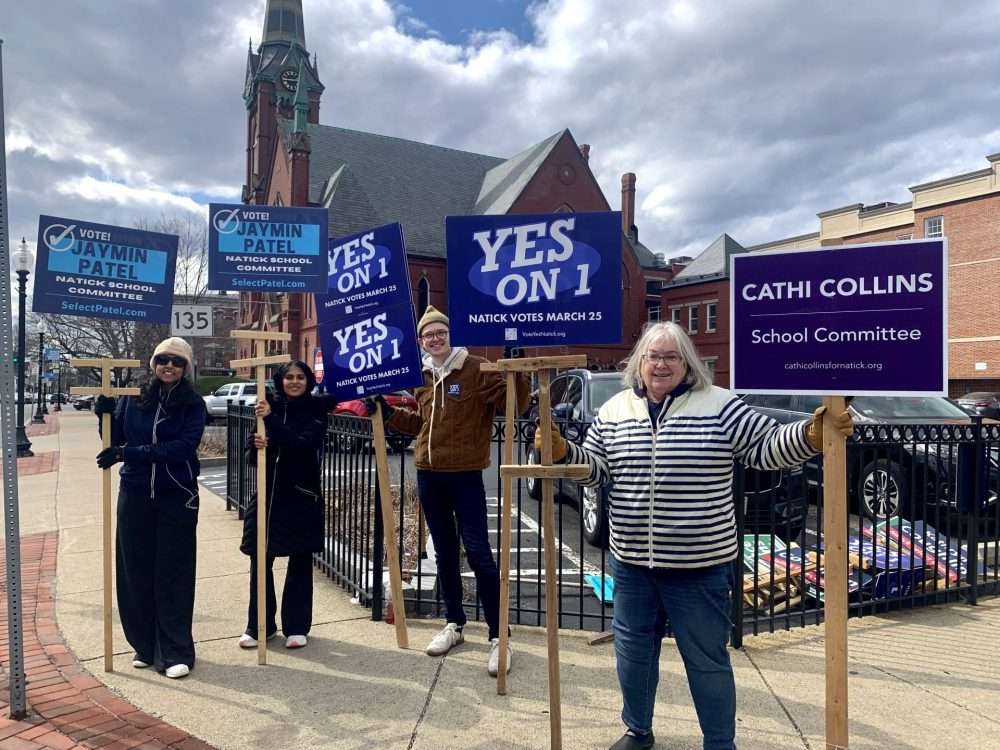
Candidates and supporters we spoke with at polling places during the day indicated that they thought the override would be approved. School Committee Candidate Donna McKenzie told us “I think it will pass narrowly,” while fellow School Committee Candidate Jaymin Patel said: “I’m cautiously optimistic that it passes.” School Committee Candidate Cathi Collins said “I am very hopeful, there’s been a good turnout, I think.”
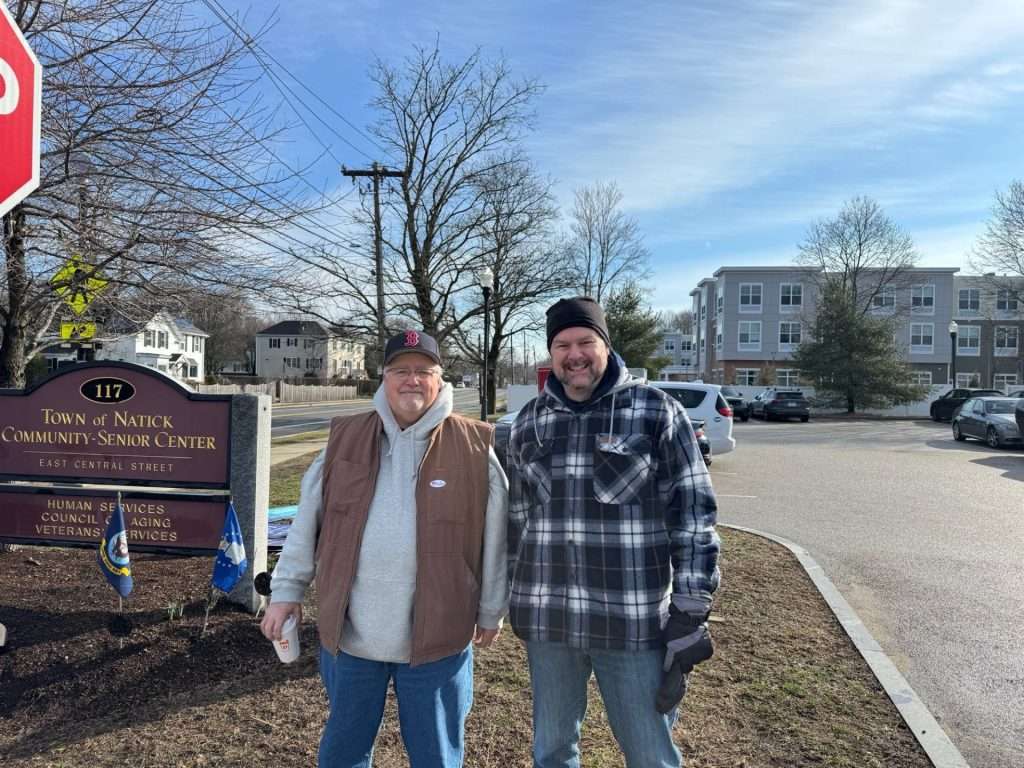
School Committee Candidate Elise Gorseth, watching the steady stream of vehicles heading toward the polls after 6pm at the Community-Senior Center, blurted out: “Natick’s turning out!” Drivers beeped and waved as they headed in and out of the parking lot.
On Wednesday morning, Natick Public Schools issued a post-election statement that read in part: “Natick Public Schools is grateful that Question 1 passed–approving an override. This will allow us to continue delivering high-quality educational programming and support for all students. We also recognize that it is not easy for residents to vote to voluntarily increase their taxes, and would like to acknowledge the challenge of balancing the needs of our schools alongside the realities of one’s own household…”
You can now support Natick Report’s work by making a tax-deductible contribution
Election Day winners
Of those School Committee candidates, incumbents Collins and Gorseth each earned about 29% of the vote to retain their seats. Patel won the third open seat with about 25% of the vote, while McKenzie—a past School Committee member—placed fourth with more than 16%.
The only other contested race was for Select Board, where three candidates vied for two three-year seats. Incumbents Kathryn Coughlin (the current chair) and Bruce Evans scored 41% and about 40% of the votes, respectively, to retain their seats; challenger Kathryn Kelly tallied more than 18% in finishing third. Both Coughlin and Evans have been involved in tough decisions during their past terms, including over the dam removal and immigration documentation policy; their votes in favor of the town selling property at 5 Auburn St. for $100 to a developer of low-income housing were revisited during the Select Board and override campaigns by those questioning the town’s track record on financial decisions.
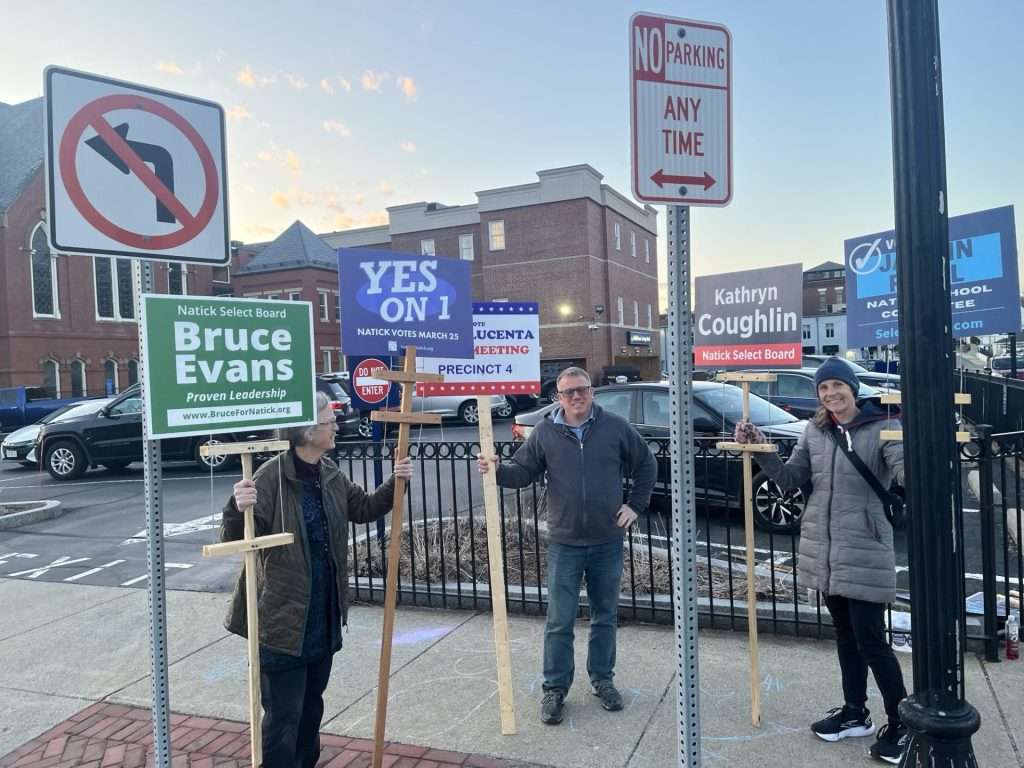
Not to be overlooked on Election Day where those running for Town Meeting, Natick’s legislative body. The race attracted plenty of newcomers to elected politics, including Brian Lucenta, a lifelong Natick resident who was holding a sign for his campaign outside of Morse Institute Library when we met. Based on the unofficial results shared Tuesday night, Lucenta won one of the 6 available seats in Precinct 4, competing among 9 candidates. He’d gotten out of work shortly before coming over to hold the sign and said, “If I was going to run, I was going for it.”
Speaking of Town Meeting, there will be a new moderator this time around. Frank Foss opted out of running again, though is in as a Constable. Spring Annual Town Meeting is set to begin on March 22.
Thanks to all who ran and to all who voted, and to the Town Clerk’s office for overseeing the election process.

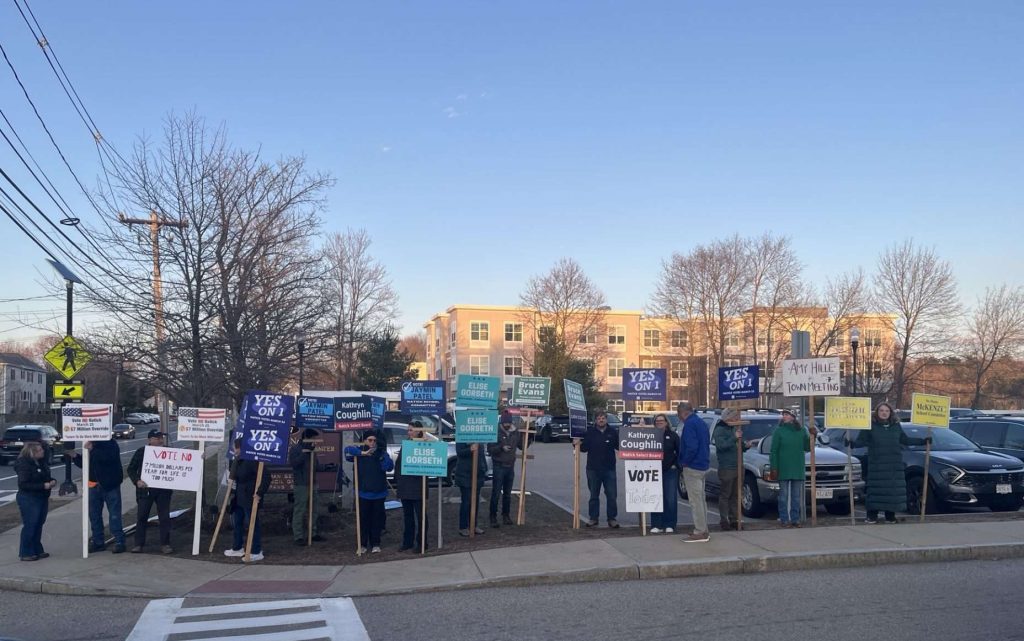
We made the rounds at polling places, including Morse Institute Library and the Community-Senior Center:
 Outgoing moderator Frank Foss and incoming moderator Jeff Alderson (courtesy photo)
Post updated 3/26/25 with NPS statement.
YES, sign me up for Natick Report’s weekday email newsletter



I can’t believe people voted yes for the override. This town miss spends money so much it’s totally disgusting. I bet if the town was audited it would come across millions of misused money.
The Town is audited every year.
The Town finances are reviewed by countless Natick citizens who devote many hours to the job.
It is easy to post an unsubstantiated claim. That is what is really disgusting.
Show us the numbers and name the “independent auditor”
Maybe we voted this way so our kids don’t write things like “Miss spends money “
The town is audited annually.
https://www.natickma.gov/171/Financial-Statements-Audit-Related-Docum
We’re in FY2025, and the outside, independent auditors are working on FY2024 right now,
Oh give me a break. The purpose of the audits is not to scrutinize the wisdom of the spending. Auditors check for things like correct application of the relevant accounting standards and whether the town is at risk of going bankrupt. From the auditor’s perspective the town can spend on whatever it wants.
Less than 30% of registered voters cast ballots. Yikes.