
On Thursday, Natick hosted its annual Juneteenth celebration on the Common. The event commenced with a community reading, co-hosted by the Natick Historical Society and Natick is United, of Frederick Douglass’s famous 1852 speech, “What to a Slave is the 4th of July?” (see recording of speech).
The speech, introduced by Wellesley College historian and Natick resident Brenna Greer and read by an array of community members, set the tone for the rest of the event. Individuals and organizations from around Natick came together in a relatively small, but spirited celebration to commemorate the end of slavery in the US and among other things, each other. Between the music and the festivities, many on the common also felt the reading, and the event as a whole, was especially meaningful this year..
The holiday itself finds its roots in the Civil War. The Emancipation Proclamation, signed into effect on Jan. 1, 1863, freed slaves in rebelling states. However, it was not until June 19, 1865 that news of the proclamation and freedom with it made its way to Texas. Texas was the final state to receive the proclamation and so the date has been memorialized as the day the enslaved became free. Though the proclamation only applied to rebelling states and it would take some time more before slavery officially ended in the US, the date remains a milestone in creating a nation that lives up to its promise of equality.
Keeping with the spirit of Juneteenth, there were strong feelings of community, union, and collective power. Booths were operated by a plethora of local businesses and organizations accompanied by music performed by the Drum Nomads, Crocodile River Music and Squeezebox Stompers. Organizations in attendance included Natick Center Cultural District, who can be thanked for hosting the event, Black Lives Belong, Natick For Black Lives Matter MetroWest, Natick is United, and SPARK Kindness. Kona Ice, Mig’s Dogs, and Say Cheese Food Truck were also there operating their own stands and trucks. Together, they provided a selection of food, music, face-painting and other festivities that carried the celebration through the afternoon.
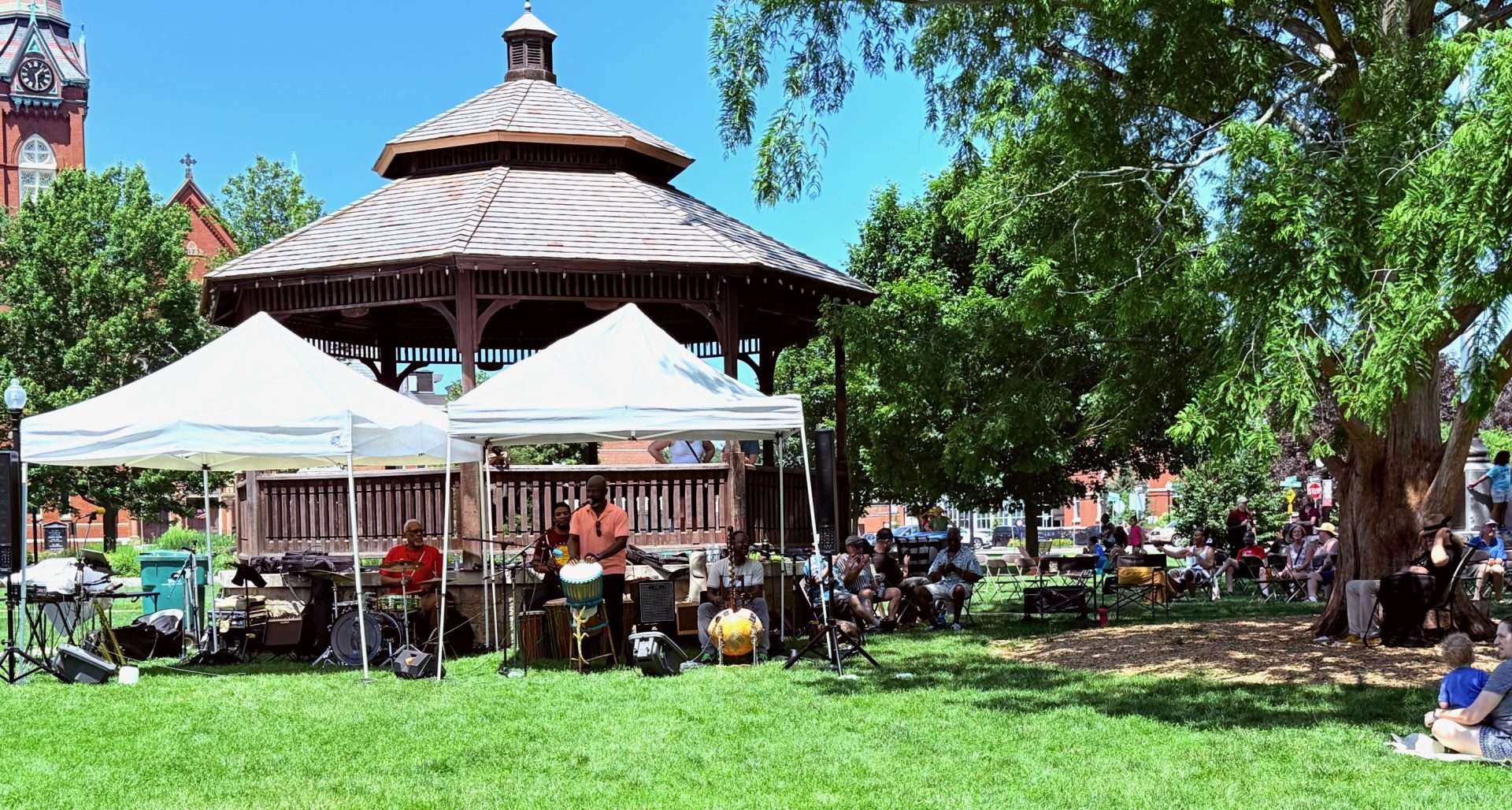 Photo by Max Cogliano
The Bucky Lew Alliance, run by Chris Broucher, was another noteworthy booth on the common. Besides focusing on the very on- theme story of Harry “Bucky” Lew, basketball’s first black professional, Boucher shared insights into Lew’s connection to Natick. In 1904, a team representing Natick had refused to play against a team with Lew on its roster on the basis of his race. However, Bucky continued to be successful with a 25-year career carrying various roles and titles off and on the court. Though Natick’s refusal to play him may be a sore spot to look back, it makes what was witnessed on the common on Thursday an all the more meaningful example of progress and change.
One sentiment that seemed to be shared by many on the common was a feeling that this event was somehow especially important now. In prior years, the celebration found renewed significance after the death of George Floyd and the ensuing protests. Today, many felt recent events had made Douglass’s speech and the day even more resonant. One volunteer said, “history can tell us a lot” and hearing so many voices collaborating was “a reminder of how powerful we are together.” Under the Natick is United tent, Executive Director Myriam Hernandez Jennings said “history repeats itself.” She felt that much of what Frederick Douglass said about slaves could now be said about immigrants in the US. She said, “what Douglass felt for his community, I now feel for my own immigrant community.”
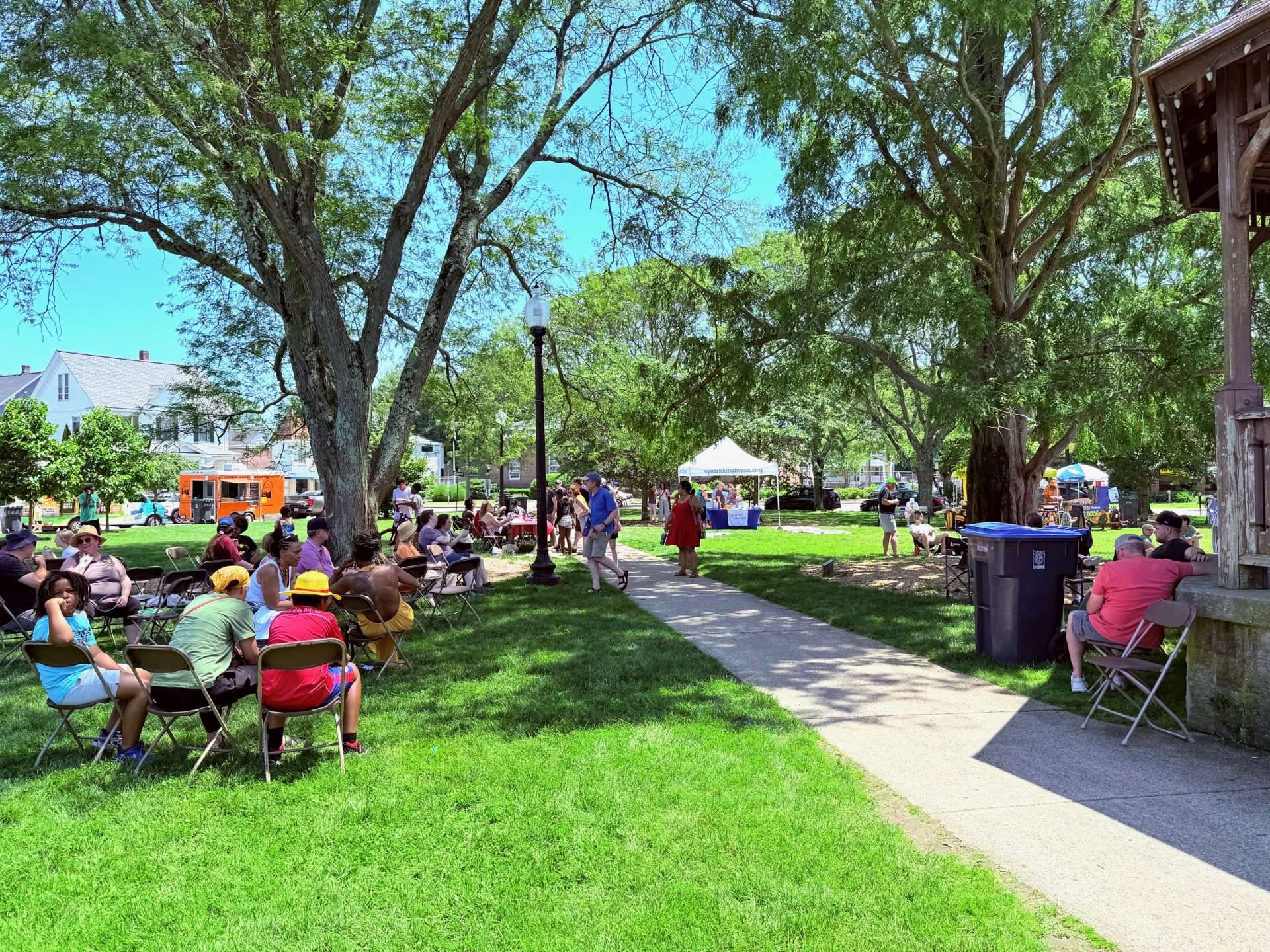 Photo by Max Cogliano
If you’d like to support our summer intern program, please make a tax-deductible donation & include a note that it’s for our intern.
