
Special to Natick Report from Chris Boucher.
Did you know Natick was once front-and-center in the battle over the integration of pro basketball?
It happened way back in 1904 when a team representing Natick in the New England League refused to play against basketball’s first Black professional, Harry “Bucky” Lew.
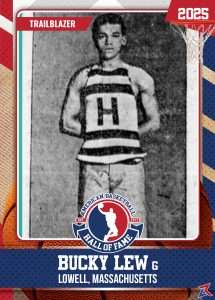 Bucky Lew
Lew made history when he signed a pro contract with a Lowell club in 1902. He stayed in the game another 25 years, and by the time he stepped away, he had integrated the roles of player, coach, manager, referee, and franchise owner.
The game in question was held in Haverhill, where Lew was playing at the time. Lew would not play that night, however, as he decided to take a seat on the bench so the game could go on without him.
In fairness, it’s important to note the men on Natick’s basketball team were not locals. They were a roving band of mercenaries, led by early basketball superstar Harry Hough, and they had played together in the National and Western Massachusetts leagues before both folded. For the 1904/05 season, they relocated to Natick.
It was the first iteration of a Natick team that refused to play against Lew. Natick hosted teams in 1902/3 and 1903/4, and no players or fans objected to his right to play. In fact, several of the players actually played with Lew in either Lowell or Haverhill.
Hough got his way that night, but if he thought he had won the war, he was mistaken. In an emergency meeting after the game, the league decided it would remain integrated. Hough and his teammates were fined and threatened with expulsion should they refuse to play Lew again.
So Hough did not have the support of the league, nor did he appear to have the support of the town. The team announced they were losing money halfway through the season and decided to play half of their remaining home games in South Framingham. After the conclusion of the 1904/05 season, the men left New England for good.
The league’s decision was a big one because Lew’s legacy includes the assist he gave the Dodgers in integrating baseball. While Jackie Robinson started in Canada, the Dodgers struggled to find a home for an integrated farm team in the United States until they reached Nashua Telegraph editor Fred Dobens, who assured them his city would welcome its Black players.
How did he know? As a high school basketball star, Dobens’ team entertained crowds at halftime of Lew’s games in the 1920s. Dobens saw firsthand what a beloved figure he was and wrote about it decades later. After Lew passed in October of 1963, Dobens wrote in his Around the Town column: “Bucky was a Negro and … a great favorite.”
The city welcomed Don Newcombe and Roy Campanella and they ultimately went on to unite with Robinson in Brooklyn. The Dodgers’ integrated organization was a success, and the rest of major league sports soon followed.
The lack of support for Hough in Natick suggests fans were part of the silent majority who supported Lew’s right to play. And although it took a while for integrated sport to catch on, it ultimately did, and Natick played a role in that evolution.
Chris Boucher is also from Lowell and has written two books about his hometown hero. His second book on Bucky Lew is set to be published by McFarland this fall. He’ll be on hand to discuss Lew at Natick’s Juneteenth event later this month. Otherwise you can reach him at chrisboucher.net.
